How Invisalign Helps Adults Reclaim Their Smile
For many adults, the decision to straighten their teeth has very little to do with vanity and a great deal to do with timing. They may have wanted orthodontic treatment years earlier but never had the budget, the schedule, or the confidence to start. Others had braces as teenagers and watched their teeth gradually shift back after college, pregnancy, stress, or years without wearing a retainer. By the time they begin looking at treatment again, the question is rarely, “Can my teeth be perfect?” It is usually, “Can I finally feel comfortable smiling without overthinking it?”
That is where Invisalign has changed the conversation.
Clear aligner therapy has made orthodontic treatment far more approachable for adults who want meaningful improvement without the look and feel of traditional braces. It offers discretion, flexibility, and a treatment process that often fits more naturally into professional and family life. Just as important, it gives many adults permission to revisit a long-standing insecurity in a way that feels practical rather than dramatic.
The real story, though, is not that Invisalign is invisible or trendy. It is that for the right adult patient, it can solve both cosmetic and functional problems in a way that supports daily life instead of taking it over.
Why adults postpone treatment for so long
Adult orthodontic patients tend to arrive with a different mindset than teenagers. They are usually more motivated, more consistent, and more realistic. They https://rowannhet033.timeforchangecounselling.com/invisalign-for-crooked-teeth-what-you-need-to-know also carry more hesitation.
In practice, the barriers are familiar. Some adults assume they are too old for orthodontics. Some picture metal braces at work meetings, client lunches, weddings, or school events with their children. Some are worried about pain, cost, or whether treatment will interfere with speaking clearly. Many have learned to manage their self-consciousness by smiling less broadly, covering their mouth in photos, or accepting crowded lower teeth as one of those things that “just happens” with age.
That last point matters. Teeth do move over time. Small shifts can create crowding, overlap, or bite changes that were not there at 18. Adults often notice it first in photographs, then in flossing difficulty, edge wear, or a sense that their front teeth do not meet the way they used to.
By the time they seek care, the emotional weight is often heavier than they expected. A person may be highly accomplished, confident in every other area of life, and still avoid smiling fully in a headshot. I have seen patients who could deliver boardroom presentations without a tremor but felt anxious about candid photos at their daughter’s graduation. That disconnect is common, and it is one reason treatment can feel surprisingly meaningful once it begins.
What Invisalign actually does
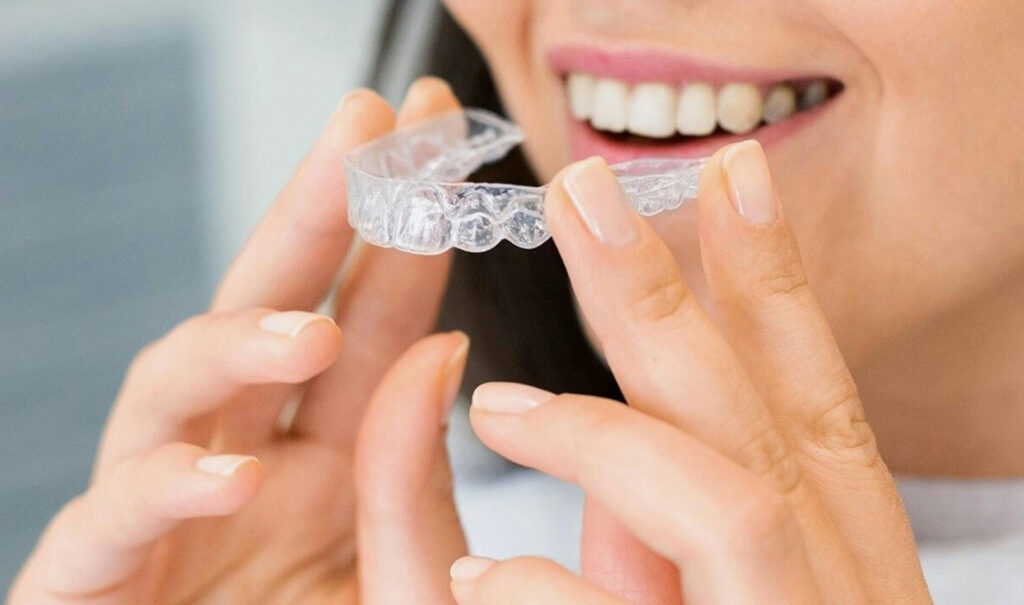
Invisalign uses a series of custom-made clear aligners to move teeth gradually. Each set applies controlled force to specific teeth, and the aligners are changed on a planned schedule, often every one to two weeks depending on the case. Attachments, which are small tooth-colored shapes bonded to certain teeth, are frequently used to help guide more precise movement. In some cases, small amounts of enamel reshaping between teeth may also be recommended to create space.
That sounds straightforward, but adult treatment planning is rarely generic. A good Invisalign case is built around three goals at once: improve alignment, protect function, and make the result stable enough to maintain.
For example, a patient may come in asking to fix one rotated front tooth, but the underlying issue is lower crowding caused by a narrow arch and a bite that places too much force on the front teeth. Simply straightening what shows in the mirror would not be enough. The treatment plan has to account for how the teeth fit together at the end, not just how they line up from the front.
This is where professional judgment matters. Invisalign is not a mail-order cosmetic product. It is a clinical tool. In skilled hands, it can correct a wide range of concerns, from mild spacing to moderate crowding and many bite issues. But the appliance itself is only part of the treatment. The diagnosis, planning, refinements, and retention strategy are what shape the outcome.
The appeal for adults is not just aesthetics
The most obvious advantage of Invisalign is visual. Clear aligners are far less noticeable than braces, especially in professional settings. Adults who spend their day speaking with patients, clients, students, or colleagues often value that immediately. They can pursue treatment without feeling that it becomes the first thing others notice.
Still, discretion is only one piece of the appeal.
The aligners are removable, which changes daily life in important ways. Adults can take them out to eat, brush, floss, and attend special events. There are no dietary restrictions in the usual sense because the trays are removed for meals. That means no worrying about popcorn caught in brackets before a meeting or trying to navigate a steak dinner with wires and elastics.
For adults with existing dental work, the hygiene advantage can be substantial. People with crowns, veneers, gum recession, or a history of cavities generally need meticulous home care. Being able to brush and floss normally can make treatment feel much more manageable than fixed braces.
There is also a psychological benefit that should not be dismissed. Invisalign often feels more compatible with an adult identity. It is orthodontic treatment, yes, but it does not carry the same social baggage some people associate with braces from adolescence. That difference may seem minor on paper, yet it often makes the leap from wanting treatment to actually starting treatment much easier.
The confidence shift tends to happen gradually
Most adults do not wake up halfway through treatment feeling transformed. The confidence gain is usually quieter than that.
It begins when they stop worrying before a photo. It shows up when they laugh without covering their mouth. It becomes noticeable when they watch themselves speak on a recorded presentation and focus on what they said rather than the crowding they used to fixate on. Then one day they compare old and new images and realize how much tension they had been carrying in their face.
This matters because smiling is not just cosmetic expression. It affects presence. In work settings, it can influence how open and comfortable a person appears. In personal settings, it can change the ease of everyday interactions. Adults often underestimate how much energy goes into managing a feature they dislike until that burden is gone.
One patient story captures this well. A woman in her late 40s came in mainly because her lower front teeth had become so crowded that flossing was frustrating. She was not chasing a “Hollywood smile” and was almost apologetic about seeking treatment at her age. About eight months in, she mentioned that she had updated her professional headshot for the first time in years and did not ask for retouching around her smile. That was not the official treatment goal, but it was one of the most valuable outcomes for her.
Invisalign can improve more than appearance
Although adults often begin treatment for cosmetic reasons, many are dealing with functional issues at the same time. Crowded teeth can be harder to clean effectively, which may increase plaque retention and make gum inflammation more likely. Spacing can trap food. Bite discrepancies may contribute to chipping, uneven wear, or strain on certain teeth.
Orthodontic treatment is not a cure-all, and it should never be sold as one. But better alignment can support better oral health in practical ways. When teeth are easier to clean, patients are more likely to maintain them well. When the bite is better balanced, there may be less concentrated wear on vulnerable edges. When front teeth are not flared or overlapping, restorative work such as bonding or veneers may last more predictably.
For adults already investing in their dental health, this can be a smart sequencing decision. It often makes sense to align the teeth before replacing worn restorations or doing aesthetic dental work. Trying to perfect the surfaces of teeth that are still out of position can be inefficient and sometimes short-lived.
That said, expectations need to be grounded. Severe skeletal discrepancies, advanced gum disease, significant jaw problems, or complex bite issues may require a different approach or a combination of treatments. Invisalign is powerful, but it is not magic. Good providers are candid about where it shines and where its limits begin.
What the day-to-day commitment really looks like
This is the part adults should understand clearly before starting. Invisalign is convenient, but it asks for discipline.
For most patients, aligners need to be worn about 20 to 22 hours per day. That means they come out for meals and drinks other than water, and they go right back in afterward. If a person snacks all day, sips sweetened coffee for hours, or frequently forgets to reinsert trays after lunch, treatment can slow down or become less predictable.
Adults who do well with Invisalign are not necessarily perfectionists. They are people who can build small habits and keep them. They keep a travel toothbrush. They learn to plan around social meals. They understand that ten casual minutes with aligners out can become several lost hours across a busy day.
Some temporary speech changes are possible at first, especially with certain tooth movements or attachments, but most patients adapt quickly. Mild pressure is normal when switching to a new set of aligners. It is often described as soreness or tightness rather than sharp pain. The first few days of treatment and the first day or two of each new tray are when people notice it most.
There are also aesthetic trade-offs. While the aligners are discreet, attachments can make them slightly more visible up close. That surprises some adults who expected a completely seamless appearance. Even so, the overall look remains far subtler than braces.
Cases that tend to work well, and cases that need a closer look
A large number of adult concerns can be treated effectively with Invisalign, especially mild to moderate crowding, spacing, relapse after earlier braces, and many bite corrections. Patients who are consistent with wear often achieve excellent results.
The cases that deserve closer evaluation are the ones involving more complex tooth movement, significant jaw discrepancy, heavily restored teeth, active periodontal disease, or very short clinical crowns that make attachments less reliable. Adults with clenching or grinding habits may still be good candidates, but their bite design and retention plan need careful thought.
Sometimes the best answer is not “yes” or “no,” but “yes, with conditions.” A patient may need gum treatment before aligners begin. Another may need a combination of Invisalign and limited restorative work to reach the result they want. A third may be better served by braces if the planned movement is highly challenging with removable trays.
That is why the consultation matters. It should include more than a scan and a sales pitch. A serious evaluation looks at the bite, the gums, existing restorations, wear patterns, and long-term stability.
Questions worth asking at a consultation
A short, thoughtful conversation can tell you a great deal about how carefully a case will be managed. Adults considering Invisalign should feel comfortable asking:
- What specific bite or alignment issues are you trying to correct in my case?
- How long is treatment likely to take, including refinements if needed?
- Are there any limitations to what Invisalign can realistically achieve for me?
- What will retention look like after treatment, and how often do you see relapse?
- If I have crowns, gum recession, or grinding habits, how will that affect the plan?
The quality of the answers matters more than polished language. Good providers explain trade-offs. They do not promise perfection, and they do not gloss over retention.
Cost, value, and the way adults usually assess both
For adults, the cost question is rarely just about the fee. It is about value over time.
Invisalign treatment can vary significantly in price depending on complexity, geography, provider experience, and whether the case is limited or comprehensive. In many markets, adults will see fees ranging from several thousand dollars upward, with more complex treatment costing more. Some dental and orthodontic offices offer financing, and insurance may contribute a portion if adult orthodontic benefits exist, though many plans are modest in what they cover.
The more useful way to think about cost is to compare it against the lifespan of the outcome. If treatment meaningfully improves confidence, hygiene access, and bite balance, many adults see it as a long-term investment rather than a cosmetic purchase. That perspective becomes even clearer in cases where alignment helps support other dental work or reduces the likelihood of further wear.
Still, value depends on follow-through. A beautifully finished case can relapse if retainers are ignored. Adults who understand this from the start tend to make better decisions. The active phase of treatment is temporary. Retention is what protects the investment.
The role of retainers, which is bigger than most people expect
There is a common misconception that straight teeth stay straight once treatment ends. They do not. Teeth have memory, and surrounding tissues need time and support to stabilize.
For adults, this is especially important because many start treatment after years of gradual shifting. If that original tendency existed once, it can exist again. Retainers are not an optional extra. They are part of treatment.
Most providers recommend full-time retainer wear initially, then nighttime wear long term, though specific instructions vary by case. Some patients also benefit from bonded retainers on selected teeth. The right approach depends on the original crowding, the final bite, and the patient’s risk of relapse.
Adults who have already experienced post-braces shifting are often the most compliant in this phase because they know what happens otherwise. That lived experience can be an advantage.
The emotional side of adult treatment deserves more respect
There is a tendency to talk about orthodontics in technical terms, millimeters, trays, attachments, wear time. All of that matters. But for adults, the emotional side of treatment is often what gives it weight.
Many have spent years editing themselves around a smile they dislike. They have trained their expressions, learned their camera angle, laughed with restraint, and normalized a private discomfort. When treatment changes that, the benefit is not shallow. It can alter how a person shows up socially and professionally.
That does not mean every patient emerges feeling like a different person. Most simply feel more at ease. They stop negotiating with their own reflection. They stop noticing the one tooth they used to see first. They smile because they want to, not because they have rehearsed how much of their teeth to show.
For a lot of adults, reclaiming their smile is really about reclaiming that ease.
When Invisalign is the right fit
Invisalign is often an excellent option for adults who want effective orthodontic treatment without the visibility and inconvenience of braces. It works especially well for people who value discretion, can commit to regular wear, and want a treatment process that integrates with work, family life, and social routines.
It is not the right answer for every case, and it should not be presented that way. The best outcomes come from accurate diagnosis, realistic goals, and a patient who understands the daily commitment. When those pieces line up, the results can be deeply satisfying, not just because the teeth are straighter, but because the smile finally feels like it belongs to the person wearing it.
That is the real appeal of Invisalign for adults. It does not turn back time, and it does not erase every imperfection. What it can do, often very well, is remove a barrier that has quietly shaped how someone eats, speaks, laughs, and appears in the world. For many adults, that is more than cosmetic improvement. It is a practical, lasting form of self-reclamation.
Omni Dental Specialty
Address: 1690 E Gonzales Rd, Oxnard, CA 93036
Phone number: +18053666000
FAQ About Invisalign
How much does Invisalign actually cost?
The out-of-pocket cost for Invisalign typically ranges between $3,000 and $8,000, with most patients paying a national average of roughly $5,100 to $5,700 before insurance.
What is the downside to Invisalign?
The biggest downsides to Invisalign are the intense discipline required to wear the trays 22 hours a day, the inconvenience of removing them to eat or drink, and the inability to fix severe, complex orthodontic issues.
Is $5000 a lot for Invisalign?
No, $5,000 is not considered a lot for Invisalign; it is exactly the national average. Treatment costs typically fall between $3,000 and $8,000, and $5,000 is the standard fee for a moderately complex case that takes 6 to 18 months to complete.